

Chemical Engineering Partners
Frequently Asked Questions
Practical answers for prospective re-refining clients.
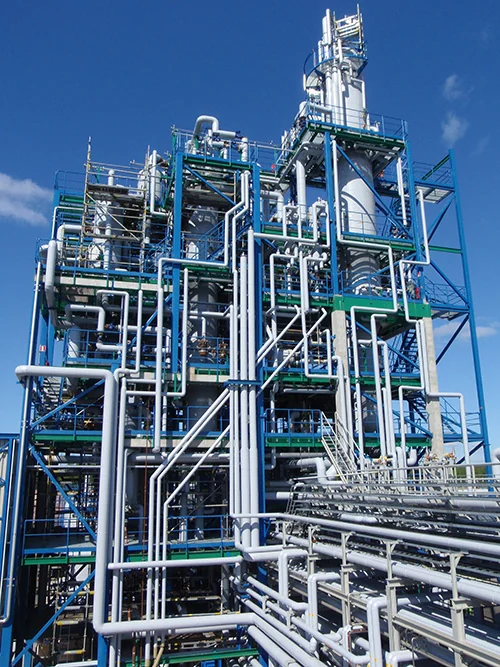
While working with clients worldwide, Chemical Engineering Partners has received many questions in reference to the CEP Process and re-refining in general. The following paragraphs contain some of the more commonly asked questions and their answers.
What is your process?
The CEP Process technology includes proprietary pre-treating steps to prevent fouling of the process equipment and remove contaminants that could poison the hydrotreating catalyst. The specifics of these steps are not disclosed until a license agreement is signed. The basic sequence of the process is to first remove water and light fuel. The light fuel is similar in characteristics to gasoline fuel. Then, a gas oil fraction is removed. The gas oil is similar in characteristics to diesel fuel. The light fuel and gas oil can be used as fuel in the plant or sold as byproducts. If they are both to be used as a fuel they can be removed in one step and eliminate a step in the process. If local environmental regulations allow it, it is generally most economical to use the light fuel as fuel in the plant. These two byproducts can provide most of the energy needed for the process. After the water, light fuel and gas oil are removed a wiped film evaporator is used to separate the lube oil from the additives and other contaminants in the used oil. The wiped film evaporator operates under vacuum so that the distillation can take place below the temperature that would cause the lube oil to crack. The residue extracted in the wiped film evaporator can be sold as a byproduct for blending with asphalt. The lube distillate produced in the wiped film evaporator is sent to the hydrotreater. The hydrotreater operates at high pressure and high temperature. In the hydrotreater, sulfur and nitrogen compounds are removed and saturation of unstable olefins and unsaturated aromatics occurs. The resulting product is “water white” and very pure. It meets API Group II base oil specifications. After the hydrotreater, it is typical to use a fractionator to separate the hydrotreated base oil product into two or three base oil products of different viscosities. The proportions of the cuts depend upon the incoming feed properties.
What are the advantages of your process compared to others?
There are a number of competing processes being offered in the marketplace. The simplest forms of oil recycling involve filtration or centrifuge and removal of water. The resulting product is of low quality and has limited uses. Generally, the product from this type of process is used as fuel. The next level of process being offered involves simple vacuum distillation after water removal. The resulting product can be used as a marine fuel but the yield is generally low and a lot of the incoming feedstock ends up as a low value asphalt blending component. It will not meet API motor oil specifications. There are also processes that extract the lube oil from the used oil with solvent extraction. The resulting product is better than the simpler processes and the yield of lube oil is better but the best quality that can be achieved is API Group I. The CEP Process uses a wiped film evaporator to maximize the yield of lube oil and hydrotreating to produce a product equal in quality to base oil produced from virgin crude oil. The resulting API Group II base oil commands a premium price as compared to API Group I oil. There are other processes being offered in the marketplace that also employ wiped film evaporators and hydrotreating but the CEP Process offers the unique advantages of being state of the art technology with a solid record of proven performance, high maintainability and reliability. Clients can have confidence in CEP’s technology, proven over decades at multiple re-refineries throughout the world, and backed by a process performance guarantee.
CEP approaches re-refinery design with an operator’s mindset. Equipment selection and design address demanding service conditions, mitigate fouling issues, and provide convenient maintenance access. The aim is durable equipment where it matters, practical maintenance from the operator’s standpoint, and fewer interruptions to production. CEP understands that the plant must run after the engineers leave, and we invite you to talk to our many satisfied clients to verify for yourself that CEP delivers on this commitment.
CEP combines process design with startup support, operator training and ongoing optimization to support consistent product quality, reliable throughput and cost-effective operation. Project-specific design and operating requirements are reviewed with each client.
CEP’s integrated process combines high base oil recovery, upstream catalyst protection, targeted equipment redundancy and practical maintenance access. CEP reports around 75% base oil yield on a wet-feed basis with 5% water, with approximately 76% achieved at LWART. Depoisoning reduces phosphorus in hydrotreater feed to approximately 5–7 ppm to help extend catalyst life. Actual performance depends on feedstock and operating conditions.
Explore CEP’s technology advantages and feedstock flexibility.
What exactly is API Group II Base Oil?
API Group II motor oil must contain less than or equal to 300 parts per million of sulfur and have at least 90% saturated hydrocarbons. This is only achieved by hydrotreating.
| Group | Sulfur | Saturates | Viscosity Index |
|---|---|---|---|
| I | >300 ppm | <90% | ≥80 - <120 |
| II | ≤300 ppm | ≥90% | ≥80 - <120 |
| III | ≤300 ppm | ≥90% | ≥120 |
| IV | Polyalphaolefins (PAO) | ||
| V | Everything not classified in Groups I, II, III or IV | ||
Some CEP plants can also produce API Group III base oils with selected feedstocks. Capability depends on feedstock quality, plant configuration and operating conditions. Contact CEP to discuss feedstock evaluation and project-specific Group III requirements.
What kind of feedstock can I put in the plant?
The best feedstock is used motor oil. It should have less than 10% water content. Other industrial oils can be included. Most plants include some quantities of other industrial oils but CEP recommends that clients carefully test and screen each load of incoming oil. CEP plants do not accept oil with high chlorine content such as parts washing fluids, nor are transformer oils with polychlorinated biphenyls (PCBs) suitable. These materials are often considered hazardous and must be disposed of according to relevant government regulations. Below is a table showing the typical feedstock oils.
| Acceptable Types of Used Oil | Potential "Problem" Used Oils |
|---|---|
| Motor Oil (Crankcase) | Heat Transfer Oils |
| Transmission Fluid | Metal Working Fluids/Cutting Oils |
| Gear Oil | Refrigeration Oils |
| Hydraulic Fluid | Some Transformer Oils |
What is the yield of base oil and byproducts from your process?
CEP reports around 75% base oil yield on a wet-feed basis with 5% water, and approximately 76% at LWART. For comparison, an earlier published material-balance example used feed containing about 5% water and yielded 73% hydrotreated base oil. That earlier example also yielded 4% light fuel oil, 4% gas oil and 14% asphalt flux. Yields vary depending on feedstock.
What is the minimum size plant?
The smallest economical size plant for a re-refinery depends on local market conditions, but it is around 4 million gallons per year of used oil feed. This is around 15,000 metric tons per year. Below this level, the fixed costs for labor and support plus the loss of economies of scale with the process equipment make the plant unattractive. There is no upper limit to the size of the plant that can be built. The size is generally constrained by the quantity of used oil available.
How much does it cost to build a plant?
The total cost depends upon a number of factors. The most important factors are the cost for local construction labor to assemble the plant and the source of the major equipment components. If U.S. or equivalent sources are selected for the equipment, then the cost may be higher than if the components are sourced from other countries having a lower cost-of-labor. The other important factor that determines the total cost is the availability of existing infrastructure. Some clients may already have a site with existing tanks or utilities in place. Costs are very site specific.
Does CEP offer an alternative lower cost approach if the client doesn't need such a high quality product?
We have designed plants without the hydrotreating section of our process. The end product will still contain sulfur, nitrogen and unsaturated compounds. In some cases, this is sufficient to meet client needs for product quality. This will reduce the cost of the process equipment by about 50%. Another option is to improve the quality of the product using clay treatment instead of hydrotreating.
CEP also offers CEP-VGX, its solvent extraction process for projects targeting API Group I base oils.
I already have a used oil processing plant but I don't have a hydrotreater. Can I add one of your hydrotreaters to my plant?
Yes, CEP has designed hydrotreating for existing facilities that went on to produce API Group II base oil. Depending on the properties of the end product of the existing facility, some modifications may be necessary to the existing process.
What services does CEP offer?
CEP's primary business is to license the CEP Process Technology. CEP provides a process license and the basic engineering design package customized to the client’s feedstock, location and base oil quality requirements. CEP supports the process of building a world class used oil re-refinery onsite, providing operating training, startup support and operator manuals. Detailed engineering support, feedstock analysis and pilot plant studies can be undertaken upon request. CEP stays in touch after the plant is running, providing operating advice and consulting services for clients.
How long does it take to build a plant?
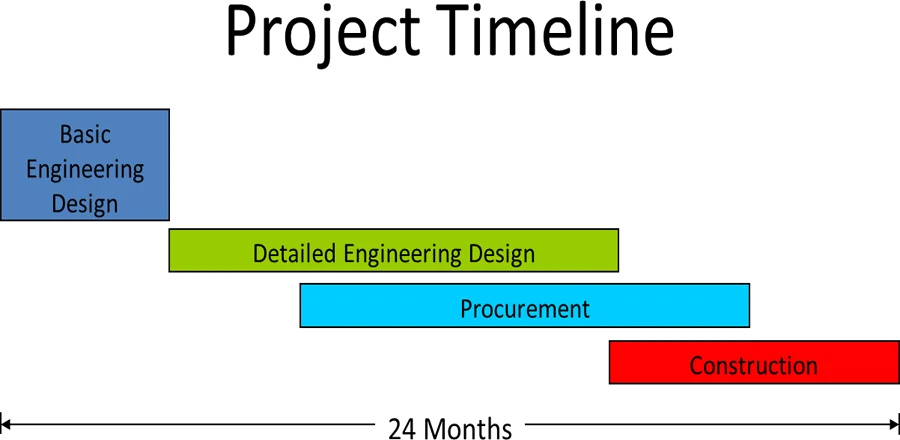
Typically, from the contract signing, the plant could be operational within 18-24 months, assuming all required permits and approvals can be obtained within this schedule.
Can I visit an existing CEP designed plant?
Yes. CEP would love to show you one of its many world-class re-refineries. A confidentiality agreement will be required for the visit.
How many people does it take to operate one of your plants?
It takes about 30 - 40 people to cover a 24/7 operation for re-refinery operations, maintenance, laboratory and management. The plant is designed to be operated in a continuous 24/7 operating mode. Deliveries and shipments can be on weekday, daytime hours. This staffing does not include the drivers to collect the used oil or the sales staff to market and distribute the product or any corporate overhead.
What are the most important considerations in having a successful re-refining plant?
The two most important things are to have a reliable supply of used oil feedstock and a reliable, well-designed re-refining process.
What kind of emissions and pollution does the plant generate?
There are no major byproduct wastes from the oil because the typical contaminants are bound up in the asphalt flux and do not leach out. The asphalt flux has been determined to be non-hazardous by the U.S. EPA. CEP designs flue gas scrubbers to minimize pollution from the heater and boiler. Water extracted from the used oil feedstock and operating water is treated in an onsite wastewater treatment plant. After treatment it is suitable for discharge to a local municipal wastewater treatment plant. The solids, dirt and debris normally found in used oil are filtered and placed in drums to be sent to the appropriate waste processing facility. Waste classification and handling requirements of these small amounts of waste depend on local regulations.
I already have some used processing equipment available. Could it be incorporated into one of your plants to reduce capital costs?
CEP is willing to evaluate existing equipment for suitability. Sizing, design characteristics and metallurgy can be checked.
What is your licensing agreement and how much does it cost?
The license agreement grants the user rights to operate a plant with a specified capacity using our technology in a specific location. CEP shares information on new developments and advances in technology in exchange for process operating data from the plant and use of the plant as a reference site. The cost of the CEP license is based on the capacity of the plant.
Discuss your project with CEP.
For feedstock-specific requirements, project scope and current commercial details, contact CEP’s team.
Your next re-refining project