

Chemical Engineering Partners
Products and Byproducts
Base oil quality and the value of recovered byproducts.
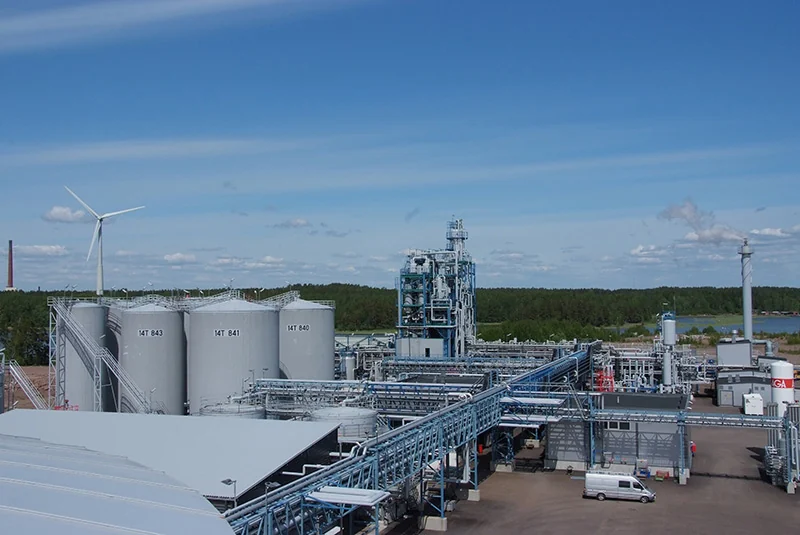
CEP’s world-class technology exemplifies the circular economy by producing API (American Petroleum Institute) Group II base oil from used lube oil. With appropriate feedstock quality, plant configuration and operating conditions, some CEP plants can also produce API Group III base oils. Explore API Group III capability.
A wide range of lubricant products can be blended from base oil produced by the CEP Process, and these products are typically manufactured and sold for use as vehicle and machinery lubricants. CEP’s clients have secured a wide range of certifications from original equipment manufacturers including Chrysler, Ford, GM, Mercedes-Benz, Renault, Volvo and others.
The typical properties of base oils produced by the CEP Process are shown below.
Typical Base Oil Properties
Properties from CEP’s published specification sheet. A dash indicates that no limit is listed in the source.
API Group II 110N
| Test | Units | Minimum | Maximum | Typical |
|---|---|---|---|---|
| Viscosity — ASTM D 445 | cSt @ 100 °C | 4.1 | 4.5 | 4.3 |
| Viscosity — ASTM D 445 | cSt @ 40 °C | — | — | 22 |
| Viscosity — ASTM D 445 | SUS @ 100 °F | — | — | 112 |
| Viscosity Index — ASTM D 2270 | — | — | — | 102 |
| Density — ASTM D 1298 | g/cc @ 60 °F | — | — | 0.865 |
| Density — ASTM D 1298 | lbs/gal @ 60 °F | — | — | 7.4 |
| API Gravity — ASTM D 287 | API @ 60 °F | — | — | 33.9 |
| Color — ASTM D 1500 | — | — | 1 | <0.5 |
| Flash Point, COC — ASTM D 92 | °F | 360 | — | 390 |
| Pour Point — ASTM D 97 | °F | — | — | -15 |
| Total Acid Number | mg KOH/gm | — | — | <0.01 |
| Total Sulfur — ASTM D 3120 | wt % | — | — | 0.02 |
| Saturates — ASTM D 2007 | wt % | — | — | 90.5 |
| Total Ash Content — ASTM D 482 | wt % | — | — | <0.001 |
| Crackle Test — Trace Water, Chevron Test Method 350 | — | — | — | PASS |
| Odor | — | — | — | None |
| Appearance | — | — | — | Bright & Clear |
API Group II 250N
| Test | Units | Minimum | Maximum | Typical |
|---|---|---|---|---|
| Viscosity — ASTM D 445 | cSt @ 100 °C | 7 | 7.4 | 7.2 |
| Viscosity — ASTM D 445 | cSt @ 40 °C | — | — | 49 |
| Viscosity — ASTM D 445 | SUS @ 100 °F | — | — | 250 |
| Viscosity Index — ASTM D 2270 | — | — | — | 107 |
| Density — ASTM D 1298 | g/cc @ 60 °F | — | — | 0.871 |
| Density — ASTM D 1298 | lbs/gal @ 60 °F | — | — | 7.4 |
| API Gravity — ASTM D 287 | API @ 60 °F | — | — | 33 |
| Color — ASTM D 1500 | — | — | 1.5 | <1.0 |
| Flash Point, COC — ASTM D 92 | °F | 450 | — | 470 |
| Pour Point — ASTM D 97 | °F | — | — | -12 |
| Total Acid Number | mg KOH/gm | — | — | <0.01 |
| Total Sulfur — ASTM D 3120 | wt % | — | — | 0.02 |
| Saturates — ASTM D 2007 | wt % | — | — | 92 |
| Total Ash Content — ASTM D 482 | wt % | — | — | <0.001 |
| Crackle Test — Trace Water, Chevron Test Method 350 | — | — | — | PASS |
| Odor | — | — | — | None |
| Appearance | — | — | — | Bright & Clear |
Byproducts of the CEP re-refining process include:
Light Fuel (gasoline) – this fuel is excellent for a plant fuel subject to local regulations. Burning this as plant fuel can reduce the plant fuel requirements by 40%.
Raw Gas Oil (diesel) – can either be used as a plant fuel or sold as a fuel, depending on the market.
Asphalt Flux – is similar to an asphalt extender, used for roofing or as an elastic extender in road asphalt.
Contact Chemical Engineering Partners for further details today!
Discuss your project with CEP.
For feedstock-specific requirements, project scope and current commercial details, contact CEP’s team.
Your next re-refining project