loader

Chemical Engineering Partners

From the first study to the first startup.

A technology partner through the full project lifecycle, bringing process knowledge and operating experience to the decisions that matter.

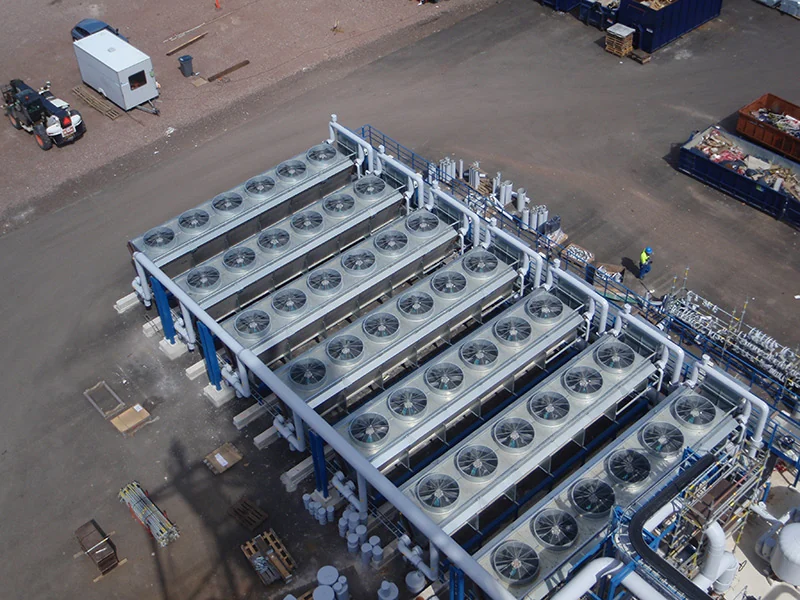
Re-refining plant: L&T Recoil • Finland
L&T Recoil • FinlandCEP project photography

01 / Define

Build a sound basis for the project.

Align the feedstock, product and project scope.

Feasibility and cost-estimate support help frame the technical and economic questions before a project advances. CEP brings process experience to feedstock assessment, capacity planning and investment evaluation.

  • Feedstock and product-quality review
  • Capacity and process considerations
  • Capital and operating cost estimates
  • Technical consulting and economic analysis

02 / License and Engineering

Translate technology into plant design.

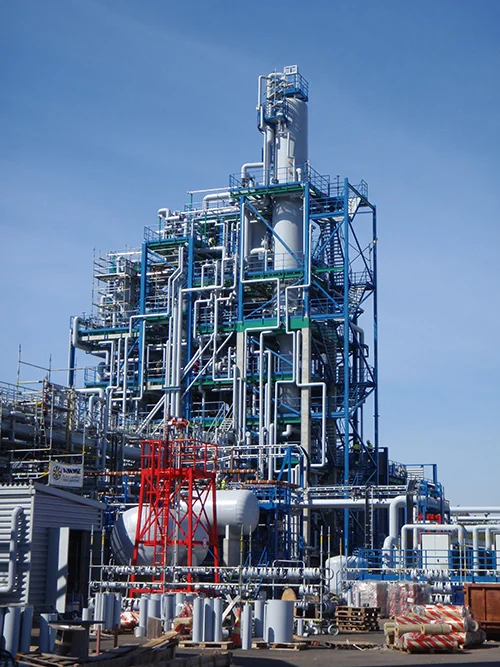
L&T Recoil • Finland
L&T Recoil • FinlandCEP project photography
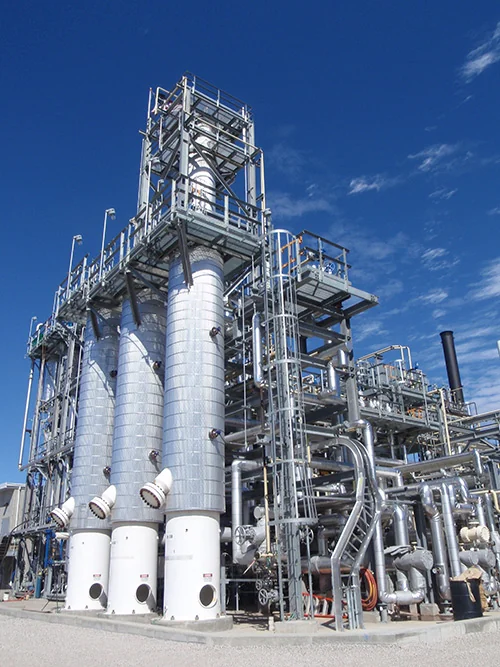
Universal Lubricants • Wichita, Kansas, USA
Universal Lubricants • Wichita, Kansas, USACEP project photography

Technology licensing

The CEP Process

Access CEP’s re-refining technology and the process expertise behind it. Licensing and engineering scope are developed for the specific project.

Basic engineering

Establish the process design

Basic engineering and process simulation establish the technical foundation for the re-refinery and the basis for subsequent design work.

Detailed engineering support

Maintain the process intent

CEP works with detailed engineering teams to help incorporate process requirements into equipment, fabrication and construction design.

Modular options

A project-specific delivery approach

CEP offers modular units through engineering and construction partners. Site foundations, erection and local requirements remain part of the overall project scope.

03 / Start up & operate

Support the people behind the plant.

01

Training & manuals

Prepare the operating team with process knowledge and operating procedures. Training supports the transition from plant construction to confident operation.

02

Hands-on startup support

CEP supports control room and field teams during startup. Simulated startup exercises help operators understand procedures, anticipate issues and develop practical confidence.

03

Ongoing technical consulting

Support for operating re-refineries includes quality troubleshooting, plant audits, capacity analysis, debottlenecking and hydrotreating consultation.

Scope & deliverables

Explore the support behind every stage.

Review the typical scope below. The engineering package and delivery approach are tailored to each project.

Basic engineering deliverables

Chemical Engineering Partners provides Basic Engineering Package services for each client. This package typically includes the following deliverables:

  • Design Basis: Site-specific meteorological and ambient conditions as well as required characteristics of utility supply systems are summarized. Hydrogen Generation options will be identified so that the best choice for hydrogen supply for the re-refinery can be determined. For plants that are to be integrated with existing facilities the customer's participation is required.
  • Process Description: The purpose and characteristics of key process unit operations and equipment are outlined in narrative form.
  • Equipment List: A list is provided to identify all required process equipment.
  • Process Flow Diagrams and Heat & Material Balances: A process simulation for the plant is developed. All process streams are defined in tabular and flow sheet format. Temperatures, pressures, flow rates, and physical properties at normal operating conditions are defined for all process streams.
  • Piping and Instrumentation Diagrams: A diagram is provided to show the interconnection of process equipment and the instrumentation used to control the process. Interconnection of key process utilities (hydrogen, steam, hot oil, etc.) is identified.
  • Process Equipment Data Sheet: Process data sheets are provided for all Inside Battery Limit (ISBL) equipment items.
  • Instrument List: Control valves, level instruments, flow instruments, pressure instruments, temperature instruments and relief devices are identified and provided.
  • Piping: A piping specification and piping classification index are provided.
  • Control Philosophy: A narrative is provided to describe the control logic and interlock schemes. A preliminary list of typical alarms is provided based on prior experience with plants using CEP technology.
  • Effluent Stream List: Quantities and characteristics of all effluent streams are defined. Specific items included are:
    • List of vapor emission sources
    • Composition and flow rate of process off gas and evaluation of whether this material can be sent to the hot oil heater or must be sent to a thermal oxidizer.
    • Hot Oil Heater and Steam Generation Boiler characteristics, evaluation of flue gas treating requirements and definition of effluent flue gas treating system requirements
    • Liquid Effluent Streams
    • Solid Waste quantities and type
    • Byproduct quantities and characteristics
    • Sulfur Balance
  • Quality Assurance and Laboratory Information: A discussion of the routine analytical testing required for a used oil re-refinery is provided. Typical sampling points are discussed and a summary of laboratory procedures and equipment is defined.
  • Utilities Consumption: Required chemicals and utilities are identified and consumption rates are shown for treating chemicals, catalyst, steam, water, nitrogen, air, hydrogen, etc.
Detailed engineering & EPC support

Chemical Engineering Partners performs the entire Basic Engineering Design in house. Upon clients’ request CEP can provide detailed engineering design services with CEP’s EPC (Engineering Procurement Construction) partners. The scope of this work typically includes the production of the following documentation:

  • Design Basis
  • Process Engineering: Detailed Piping and Instrumentation Diagrams, pump hydraulics, safety valve and rupture disc specifications, thermal design of heat exchangers, and line list
  • Mechanical: General arrangement drawings for all fabricated items, lubrication list
  • Piping: Piping layouts and isometric diagrams, Bill of Material for piping items, Stress Analysis and Piping Specification
  • Civil and Structural: Structural fabrication drawings, Bills of Quantities / MTO, Foundation layouts, Statutory approval drawings
  • Overall and Unit Plot Plans
  • Detailed Instrument, control system and control valve specifications and Terminal drawings
  • Electrical: List of motors and electrical consumers, Power and Lighting Layouts, Bill of Quantities for bulk items
  • Inquiry specifications for Packages
  • Insulation and painting specifications

Contact CEP today to see what CEP can do for your application!

Feasibility & cost estimates

Chemical Engineering Partners provides Cost Estimate and Feasibility Study Services to clients. The typical list of deliverables for the Feasibility Study is as follows:

  1. Design Basis: The client will participate in establishing a basis for the plant design. CEP will establish capacity, feedstock characteristics, product quality and plot space. A questionnaire will be required to get a better understanding of power supply and general site conditions that may affect the design.
  2. Preliminary Process Flow Sheets: The drawings will show major equipment, pumps, exchangers, vessels, etc.
  3. Preliminary Emissions Information: Approximate values for flow rates and composition of effluents will be provided. This information may be sufficient to initiate discussions with local permitting agencies.
  4. Equipment List: Major equipment items will be identified and preliminary equipment sizing will be provided. These are subject to change after detailed simulation models are developed during Basic Engineering.
  5. Cost Estimate:
    1. Estimate Basis - Define procurement preferences and/or limitations (i.e. UK, EU, India, Eastern Europe supply)
    2. Pricing for Major Equipment
  6. Financial Model: A financial model will be developed for the project to facilitate the client's evaluation of alternatives and sensitivities. This will include gross margin and internal rate of return calculations.
Training & operating manuals

CEP, as part of a comprehensive program, provides training and operating manuals for CEP designed re-refineries. The operating manuals include standard operating procedures (SOPs) for operating the plant as well as plant startup, shutdown and troubleshooting problems that may occur. Engineer and operator training sessions are performed at the project site. The training familiarizes the plant personnel with the process, equipment, instrumentation, and other material in the operating manuals. A general breakdown of the training is shown below. The training program is a valuable resource for a successful and reliable operation.

  • Introduction to used oil re-refining
  • Used oil characteristics
    • Criteria for re-refining
  • Process Fundamentals
    • Purpose of each step of the process
    • Operating conditions
    • Maximizing catalyst life
    • Identifying and resolving process issues
      • Fouling
      • Upset Conditions
  • Safety
    • Proper responses to various unexpected scenarios
    • Safety concerns for operating the plant
    • Preventative measures to prevent dangerous situations
  • Control
    • Parameters that control the product quality
    • Parameters that control the product yield
  • Maintenance
    • Preventative measures to minimize downtime
    • Mechanical integrity program to ensure equipment life and prevent failure
Plant startup

Plant startup is a particular area of expertise for Chemical Engineering Partners. CEP provides detailed hands-on support during the plant startup. To ensure safety and smooth operation, CEP conducts a simulated startup with all the operators and engineers. The simulated training allows the operation team to better anticipate startup issues and to properly respond to each situation. CEP provides hands-on support for both control room and field operation. Throughout the startup, the operation team is encouraged to develop confidence in the procedures and take on more responsibility. CEP shares years of operational experience and expertise in order to ultimately enable the clients to independently manage the plant’s operation. Once the operation team is confident and comfortable with starting the plant independently, future operations and turnarounds run smoother.

Consulting & plant optimization

If the client elects to manage the detailed engineering design, it is important for CEP to provide technical consulting support. CEP has extensive experience working with several different detailed engineering firms and each company has required support from CEP to better understand process requirements. Fabrication and construction drawings developed by the detailed design firm must incorporate CEP’s operating experience. This ensures that all design details conform to CEP specifications and requirements.

CEP can provide consulting to existing re-refineries experiencing problems with operation or looking to improve operations. With over 25 years of operating experience CEP has confronted and solved many of the problems that are faced by operators. CEP’s consulting services include the following:

  • Feedstock/product quality analysis
    • Laboratory characterization
    • Troubleshooting product quality
  • Plant Audit
    • Capacity analysis
    • Debottlenecking
    • Optimization (yield and quality)
  • Hydrotreating Consultation
    • Catalyst capability
    • Operating conditions
    • Product specifications
  • Economic Analysis
    • Up-scaling of plant capacity
    • Equipment re-sizing and re-designing
    • Capital cost and operating cost estimate
Catalyst & modular units

In June 2009, CEP started offering its own brand of hydrotreating catalyst, CEP-HRX™. CEP has developed this catalyst through years of experience designing and consulting for re-refining plants. CEP-HRX™ catalyst maximizes catalyst life in re-refining applications while producing high quality API Group II base oil. CEP’s catalyst is even proven to produce API Group II base oil from lower quality used oil feedstocks, such as found in Brazil.

CEP offers modular units as an option to limit the risk and liability of the customer in managing the project. CEP will work with one of its partners to complete the detailed engineering and construction of the modular units in the USA. The modular units are then shipped to the client’s site for erection. The client retains responsibility for foundation and erection of the modules on site.

Your re-refining project

Find the support your project needs.

Your next re-refining project

Let’s put potential to work.

Discuss your project