

Chemical Engineering Partners
Technology Overview
A detailed explanation of each processing stage.
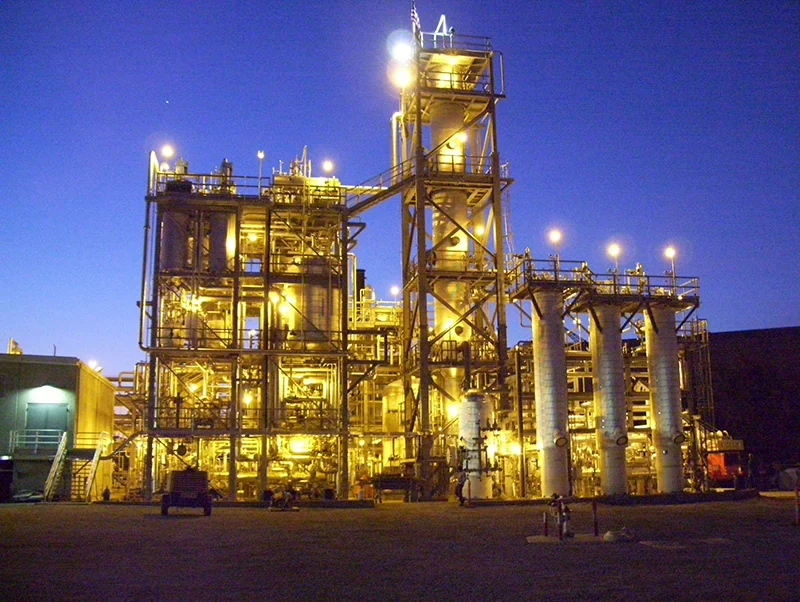
- Step 1: Dehydration/Defouling
- Step 2: Depoisoning
- Step 3: Wiped Film Evaporation
- Step 4: Hydrotreating (CEP-HRX™)
- Step 5: High Quality Base Oils
Feedstock analysis and selection
Before processing, feedstock is analyzed and selected. In some countries, regulatory requirements prohibit processing used oil with high levels of Polychlorinated Biphenyls (PCBs) or Chlorides. Additionally, process considerations require evaluation of feedstock to determine suitability for re-refining. Each load of used oil is tested before being accepted by the re-refinery.
Step 1: Dehydration/Defouling
CEP has developed chemical treatment techniques to reduce the fouling of process equipment thereby increasing on-stream availability while reducing maintenance costs. Used oil is difficult to process. The presence of additives and contaminants makes it very difficult to employ conventional petroleum processing techniques without accelerated fouling and coking in process vessels and heat exchangers. The CEP Process incorporates specialized technology to deal with specific contaminants in used oil and reduce fouling and coking. As additives packages and lube oil properties have evolved over the years, CEP research and development has adjusted our processing techniques to maintain optimal performance.
Dehydration: Water and light hydrocarbon removal
Dehydration removes water and light hydrocarbons such as fuel that are often commingled into used oil. In some cases it is possible to extract and use the light hydrocarbon byproducts as plant fuel, reducing energy costs by up to 40%. If local regulations do not permit the use of these byproducts as plant fuel, they can be sold as fuel.
Step 2: Depoisoning
The second step of the process is removal of contaminants that are poisonous to the catalyst before the hydrotreating step. Rapid deactivation of the hydrotreating catalyst occurs when these poisons are present. CEP has conducted extensive research and analysis to identify the compounds that contribute to catalyst deactivation. Proprietary CEP technology removes catalyst poisons and extends catalyst life.
Step 3: Wiped Film Evaporation
The third step of the process is to separate the base oil from the additives and high boiling hydrocarbons. A wiped film evaporator operating under vacuum is used to achieve this separation. The vacuum allows separation at lower temperatures (before the base oil cracks). CEP has developed optimal operating temperatures and residence time in the wiped film evaporator to minimize coking that often occurs in distillation equipment.
Step 4: Hydrotreating with CEP-HRX™
The fourth step is hydrotreating using proprietary CEP technology, where the separated base oil is exposed to hydrogen at high pressure in the presence of catalysts. Three hydrotreating reactors are used in series to reduce sulfur to less than 300 ppm and increase saturates to over 90%, meeting the key specifications for API Group II base oil. The use of CEP-HRX™ catalyst results in a very high quality hydrotreated base oil.
Step 5: High Quality Base Oils — Final fractionation
The final step is vacuum distillation to separate the hydrotreated base oil into multiple viscosity cuts in the fractionator.
Discuss your project with CEP.
For feedstock-specific requirements, project scope and current commercial details, contact CEP’s team.
Your next re-refining project