loader

Chemical Engineering Partners

Renewed again and again. Reliability engineered into every step.

An integrated re-refining process built around feedstock recovery, catalyst protection and API Group II base oil quality.

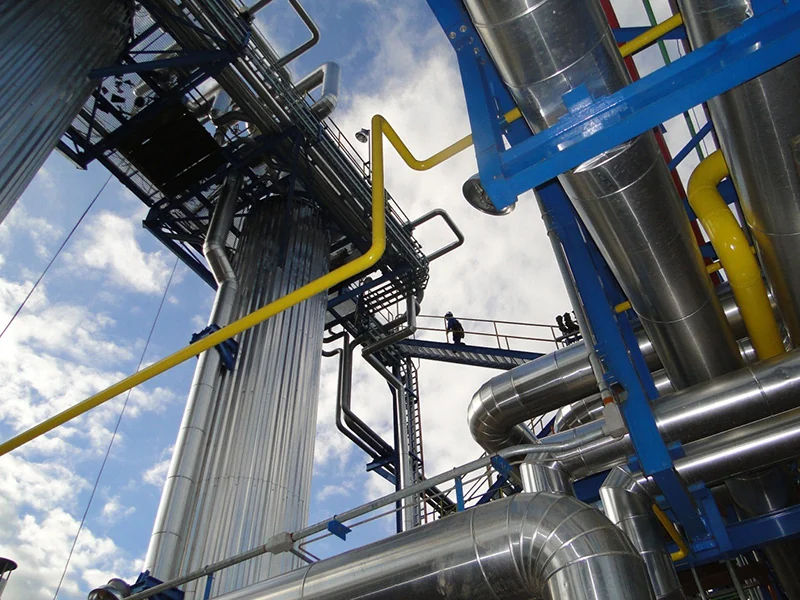
Re-refining plant: LWART • Brazil
LWART • BrazilCEP project photography

Technical information

Explore the details.

Process information and practical guidance
for your next re-refining project.

The CEP Process

From used oil to high quality base oils.

  1. STEP 01Dehydration/Defouling
  2. STEP 02Depoisoning
  3. STEP 03Wiped Film Evaporation
  4. STEP 04Hydrotreating (CEP-HRX™)
  5. STEP 05High Quality Base Oils
01

Improve on-stream availability

Dehydration/Defouling

Dehydration removes water from the used oil. CEP’s defouling process reduces the fouling associated with used oil treatment, increasing on-stream availability while reducing maintenance costs.

02

Protect the catalyst

Depoisoning

Proprietary treatment removes compounds that can deactivate the downstream hydrotreating catalyst. This step precedes wiped film evaporation. Eliminating additives and contaminants in the used oil stream reduces catalyst fouling, thereby increasing uninterrupted process runs.

03

Recover the base oil

Wiped Film Evaporation

Vacuum separation recovers the base oil fraction from additives and other high boiling point material. Short residence time and reduced operating temperature help limit coking.

04

Upgrade oil quality

Hydrotreating (CEP-HRX™)

Hydrotreating with proprietary CEP-HRX™ catalyst removes sulfur and nitrogen compounds and saturates unsaturated compounds to enable API Group II base oil production.

05

Return to productive use

High Quality Base Oils

The upgraded oil is separated into viscosity cuts through final fractionation, ready for use as virgin-equivalent base oils in lubricant formulation.

One integrated process, with essential supporting stages.

This five-stage overview highlights the principal technology sequence. The complete plant also incorporates feed preparation, removal of water and light hydrocarbons, and final fractionation into the required viscosity cuts. CEP customizes the process design for specific feedstock and project requirements.

The CEP advantage

Designed for recovery. Built for reliable operation.

An integrated process informed by decades of commercial re-refining experience. Engineering Built on Operating Experience, Designed for Operators.

Higher recovery

Around 75% base oil yield

CEP reports base oil yields of around 75% on a wet-feed basis with 5% water. LWART in Brazil achieves approximately 76% on a wet-feed basis using the CEP Process.

Yield will depend on feedstock composition and operating conditions. Comparisons should use the same feed basis and product specifications.

Longer catalyst life

Remove poisons before hydrotreating

CEP’s depoisoning process lowers phosphorus in the distillate feeding the hydrotreater to approximately 5–7 ppm, helping protect the catalyst and prolong its operating life.

High on-stream availability

Operating experience that maximizes uptime

Commercial operating experience informs where redundant equipment is useful to keep the plant running during maintenance. Engineering design using durable equipment and practical maintenance access supports high uptime and consistent throughput.

Value over the plant lifecycle

Balance capital cost and performance

CEP’s design basis rests on an integrated approach to the cost of the project, weighing relative capital and operating costs. The CEP Process provides competitive capital and licensing costs that support optimal yield, throughput, catalyst life and plant maintenance while taking into account energy, hydrogen, and other operating costs.

When evaluating a technology provider, CEP recommends examining at least 15 years of commercial operating history, including consideration of catalyst costs, maintenance costs, repairs, and plant downtime.

Feedstock flexibility

Different used oils. Consistent quality objectives.

CEP processes a range of used lubricating oils with varying contaminant levels, including:

  • Motor oil (crankcase oil)
  • Transmission oil
  • Gear oil
  • Hydraulic fluid

Used oils containing elevated contaminant levels have consistently been regenerated into high quality API Group II base oils using the CEP Process.

CEP’s expertise in feedstock characterization and the applicable acceptance requirements informs each plant’s process design and operating conditions.

Why the process design matters

Targeted hydrogen use. Continuous efficient hydrotreating.

Avoid the cost of introducing hydrogen too early

CEP’s experience in characterizing contaminants allows its process to introduce hydrogen at the right stage. The CEP Process does not need to introduce hydrogen before dehydration to stabilize used oil and reduce coking, thereby avoiding higher capital expenditure (CapEx) and operating expenditure (OpEx). The CEP Process instead uses upstream pretreatment and depoisoning before hydrotreating, protecting the catalyst while avoiding the added cost of introducing hydrogen earlier.

Continuous operation instead of batch hydrotreating

CEP’s hydrotreating process is continuous, supporting steady throughput and consistent base oil quality, without repeated batch cycles that interrupt processing and create intermediate products to store.

One integrated process

CEP offers proven proprietary technology including the depoisoning, wiped film evaporation and continuous hydrotreating steps, as well as engineering, startup and operating support. This integrated approach delivers the combined goals of feedstock recovery, catalyst protection and reliable plant operation.


Discuss your feedstock and performance targets →

CEP-HRX™

Catalysts selected for re-refining.

The right catalysts for used oil re-refining.

CEP introduced its proprietary hydrotreating catalyst in 2009, drawing on extensive experience in re-refinery design and operation. CEP-HRX™ is used with CEP hydrotreating technology to support quality API Group II base oil production.

Catalyst selection, feedstock characteristics and operating conditions are considered in designing each plant. Upstream depoisoning enhances catalyst performance.

Discuss catalyst requirements ↗

Product quality

Recovered resource. High quality base oil.

High Quality API Group II base oil

Quality through hydrotreating

Hydrotreating removes sulfur and nitrogen compounds and increases saturation, producing virgin quality lube base stock. CEP’s technology is designed to produce API Group II base oils suitable for a wide range of lubricant applications.

Designed around your project

Feedstock to product specification

Feedstock characterization, product targets, plant requirements inform process design. Final fractionation separates the hydrotreated oil into specified viscosity cuts.

CEP-VGX

Solvent extraction for API Group I base oils.

For projects that do not require Group II quality output, CEP-VGX is CEP’s solvent extraction process for projects intending to produce API Group I base oils.

Explore CEP-VGX →

API Group III capability

Selected feedstocks. Group III base oil.

Some CEP plants are able to produce API Group III base oils using selected feedstocks. This capability depends on feedstock quality and the plant’s process configuration and operating conditions.

For projects targeting API Group III output, CEP evaluates the feedstock and project requirements to determine the appropriate process design.

Discuss your Group III requirements →

Designed with the operator in mind

Reliability starts with the design.

Durability where it matters

Equipment selection addresses demanding operating conditions and fouling, informed by many decades of practical re-refinery operating experience.

Maintenance built into the plan

CEP-designed access for inspection, cleaning and maintenance helps support uptime, throughput and cost-effective operation.

CEP Support into the Future

CEP provides engineering, training, and startup support as well as ongoing optimization, working together with our clients to achieve consistent plant performance.

Your next re-refining project

Let’s put potential to work.

Discuss your project